Archive - August, 2009

Why Do Complex Time Management Systems Fail?

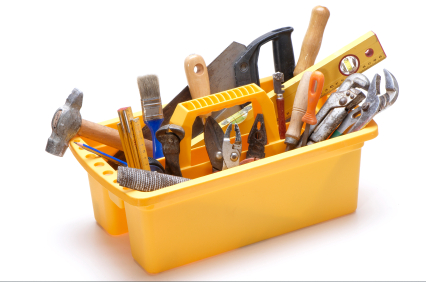
One of the most common reasons that people’s time management systems fail is due to complexity.  Their system or tools are simply too complex for long term success.

This usually happens in one of three areas:


  • Too complex for the task at hand
  • Too complex for the user
  • Too complex for everyday use


Tools That are Too Complex for the Task at Hand

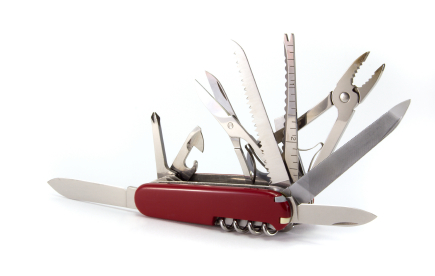
We have been sold on complexity.  Look at some of the leading time management solutions.  Look at smartphones.  Look at Outlook.  Most of them are so bloated with features that the manuals can be inches thick.  Most people will never master most of the components.

So, how did we arrive at the assumption that the more complex and feature rich a tool/gadget is, the more productive it is?  Usually, this is the result of years of adding more and more features to such a product.  Outlook and many smartphones are good examples of this.  (This is why it took such a radical redesign as the iPhone to reset the phone industry)

When it comes to time management: “The simplest solution is the usually the most effective.”  

Look for the simplest solution or tool for the task at hand.  Sometimes a yellow pad is better for your todo list that some fancy PDA or computer program.


Too Complex for the User

Another area of complexity occurs when the tools are too complex or difficult for the person trying to use them.   This is not an attack on the skills of the person, but rather a statement that people should use the tools that are comfortable and work for them.

If you are comfortable with a paper-based dayplanner, why would you try to pick up the latest wireless web-syncing gadget solution?  It will only waste your time and frustrate you.  And it will be sitting in a drawer somewhere in less than 30 days.

Stick with the tools that you are good with and suit your work style.


Systems that are too complex for Everyday Use

If your time management system is so complex that it is overwhelming, then it actually becomes a hindrance to getting your work done.  Time management when done right is an enabler to action and allows you to get more done with less effort.

If you find yourself spending most of your day writing down “next actions” instead of doing things, then your system might be too complex.  Time management is about organization, but it is also about action.  Most time management solutions concentrate too much on the organization side and not enough of the action side.  


What are your thoughts on the complexity of your time management solution?


Do You Have Too Much Friction in Your Life?

What is Life Friction?

Life friction is the rubbing that occurs in daily life due to poor planning, preparation, and action.

Life friction is all the little things that happen to you due to your disorganization.

Life friction adds stress.

Life friction adds extra work.

Examples:

- It is the trouble that is created when we forget a task or an obligation.  (I forgot that report was due today.  I forgot about that meeting this afternoon.)

- It is the self-inflicted stress that is the result of missing a task or deadline.

- It is having to redo a task over again due to poor planning.  (You have to make an extra trip to the store because your forgot something.  Might have written it down somewhere… but you didn’t have the list with you.)

- Complications that arise from leaving something till later.  Tasks are harder to complete the longer they sit.

- It is the cost or penalty associated with doing something at the last minute.  (Late fees?  Increased prices?)

Too much Friction?

What happens when two things have lots of friction?  Heat is generated.  Eventually, if you rub two sticks together it starts a fire.

So, the question is…

Can you have have too much life friction?

Can you catch fire from Life Friction?

Yes, you can.

Have you ever seen someone go “up in flames” at work?  Or have their person lives destroyed due to disorganization?

It happens.

People lose jobs, and relationships can be destroyed by life friction.

What are you doing to minimize the Life Friction in your daily activities?

Lose your laptop for increased Productivity?

Accidentally left my laptop at home yesterday when I headed into the office.  My first instinct was to immediately turn around and head home to get it. After all, how was I going to function with out it? How was I going to get work done?

I do not live far from the office, so we were not talking a long trip to go back and get it. It was more the principle of the matter.  My iPhone was with me, so I could check email as needed. But, I was determined not to sit there sending off emails on my iPhone all day.

My workplace is definitely a laptop-slinging world where people rarely attend meetings without them.  But, to my surprise, I found that I actually got a lot more done without my laptop:

  • Walking around – I am a huge fan of “walking around” to get things done.  I am not talking about walking around the office to “gossip.” But rather, interfacing with people face-to-face.  I often tell my team to “reach out and touch someone.”  Instead of sending an email to someone down the hall.  Go down there and discuss it in person.  Amazing how much quicker business gets done.
  • Making Meetings More Productive – At my office, it freaks people out if you come to a meeting without your laptop.  By attending sans laptop, and simply paying attention to everyone, it really startled people.  Sounds pretty basic, but try it, you will be surprised the impact it will have in your workplace.
  • Concentrating on Tangible Tasks – Without my laptop, I found myself working more on tangible tasks.  Instead of slogging through email and surfing through articles on the web, I got more done working by hand.  I developed several projects in my notebook and was very productive.

So, does technology really bring productivity?  Too many companies rely on it without really looking at whether it is an productivity enabler or a hindrance.  A recent study shows that workers spend on average 13 hours a week on email!  This can be up to a quarter of their time.  What could they do if they had that time back?

Some companies have email-less Fridays.  I would recommend that companies go further and have a day each week dedicated to unplugging entirely from the computer.

What are your thoughts on technology and productivity?  How does it impact your company?

PS – Thanks for @StephCalahan for the article link.

Deposit Checks via iPhone! USAA

USAA Banking App allows check deposit via iPhone

USAA has had one of the leading banking apps for the iPhone for some time.

Always pushing forward, USAA upgraded their app yesterday to include check deposit via your iPhone.

You read that right… USAA customers can now deposit checks by simply taking pictures of the front and back of the check.  And magic!  It is deposited in your account.

USAA has had the Deposit@Home feature for some time that has allowed their customers to deposit checks via their home computers with a scanner.  It works well.

I have yet to test this new app.  I don’t have any checks to deposit!  In fact, I cannot remember the last time I had to deposit a check.

As slick as this app is, I wonder if it is quicker that the 30 seconds it takes me to put a check in a pre-paid deposit envelope and walk it to the mailbox. Then again, if you want almost instant deposit this could really be a time saver.

How can I work in a hotel like this?!

When you travel, whether business or leisure, you want a nice place to relax when you get to the hotel.

These pics are from an upscale hotel where I stayed.  When I reached my room I was amazed to see that every surface top was covered with clutter.
Magazines, brochures, ads, remotes, pens, pads, junk, glasses, and who knows what, were neatly spread out on each table and nightstand.
There was no room for any of my stuff, let alone room to setup to do some work.
Solution?
I swept all this stuff into a large pile and placed it in the corner of the room out of the way.
What are your exeperiences with travel clutter?  What hotels have a good sense of organization?
If you have pics, link them below.
BTW – Seems like hotels are a good opportunity for some professional organizers to lend their services.

Page 1 of 212»